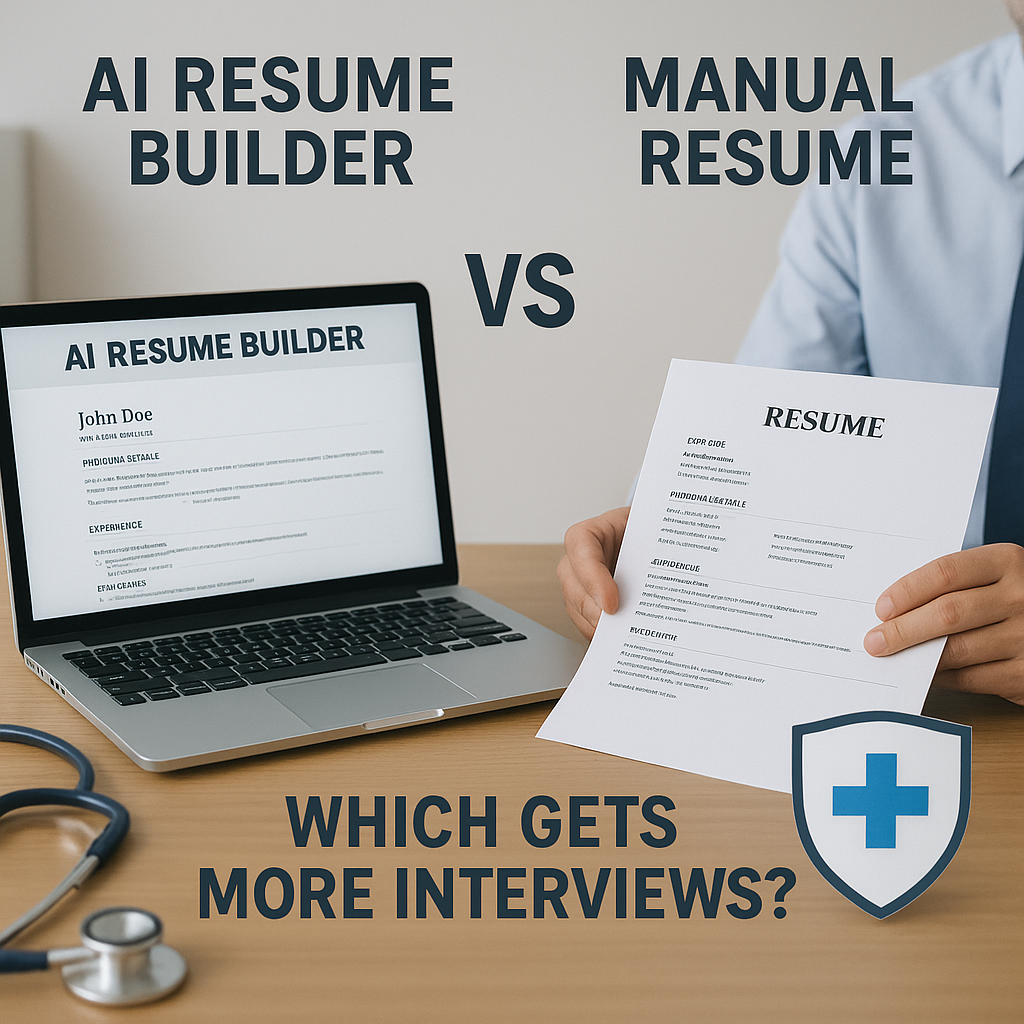
AI Resume Builder vs Manual Resume: Which Gets More Interviews?
AI resume builders offer ATS optimisation and speed, while manual resumes bring personality and storytelling — find out which approach gets you more interviews.
Introduction
In today's competitive job market, crafting a standout resume is paramount to securing interviews. The debate persists: AI Resume Builder vs Manual Resume: Which Gets More Interviews? Understanding the strengths and weaknesses of both formats can be pivotal in your career journey.
AI resume builders offer convenience and tech-driven insights, while manual resumes provide a personal touch, allowing for creativity and individuality. But which option truly elevates your chances of landing interviews? In this article, we'll break down both approaches, providing actionable career advice and best practices to enhance your job search.
Understanding AI Resume Builders
AI resume builders have gained popularity due to their efficiency and sophisticated algorithms. These tools often analyze job descriptions and recommend keywords to enhance visibility in Applicant Tracking Systems (ATS). For optimal results, consider using our Resume Builder to create a professional resume that stands out.
Key Features of AI Resume Builders
- Keyword Optimization: AI tools suggest relevant keywords based on job listings.
- Formatting Options: Pre-designed templates ensure professional formatting.
- Customizable Sections: Users can tailor content quickly.
A study from the Bureau of Labor Statistics indicates that over 70% of employers use ATS to filter resumes. This shows how vital it is to use tools that optimize for those systems.
The Value of a Manual Resume
While AI tools can automate the process, manual resume crafting presents opportunities for self-expression and emotional connection. A well-tailored manual resume reflects your personality and career journey.
Benefits of Crafting a Manual Resume
- Personalization: You can add anecdotes or unique phrases that resonate with potential employers.
- Creativity: A manual resume allows for a creative layout that captures attention.
- Contextual Storytelling: You can narrate your story, showcasing how experiences shaped your skills.
Consider Sarah, a marketing professional who customized her resume with a personal success story about a campaign that tripled her previous employer's customer engagement. This personal touch won her an interview, showcasing how a manual resume could resonate deeply with recruiters.
How AI Resume Builders Function
AI resume builders analyze vast amounts of data to help users craft effective resumes. Here’s how they typically work:
The Step-by-Step Process
- Input Data: Users provide personal and professional details.
- Job Analysis: The AI examines job postings for relevant roles.
- Customization Suggestions: It recommends adjustments to improve ATS compatibility.
- Final Edits and Formatting: Users can choose different formats before downloading the final product.
Tools like LinkedIn offer robust resume building features powered by AI, streamlining the job application process.
The Personal Touch of Manual Resumes
Manual resumes thrive on authenticity and individuality. In an era of generic applications, a thoughtfully written manual resume can be a breath of fresh air.
Why Manual Resumes Shine
- Engagement: Unique structuring can capture recruiters' immediate interest.
- Flexibility: Writers can adapt their styles according to industry demands or personal flair.
- Comprehensive Context: Manual crafting allows for storytelling that connects experiences to aspirations.
For example, John tailored his software engineering resume by showcasing his journey from coding in childhood to developing complex systems in his previous role, creating a compelling narrative that left a lasting impression on interviewers.
Which Gets More Interviews? A Data-Driven Approach
Determining whether an AI resume builder or a manual resume garners more interviews can be subjective and data-driven.
Statistical Insights
- Response Rates: Resumes optimized through AI typically see a 20-40% increase in response rates due to key ATS optimization.
- Feedback Loops: Manual resumes that tell a strong story may lead to better engagement during interviews, as they allow candidates to substantiate individual claims.
In a recent analysis by Indeed, applicants using AI-crafted resumes received 30% more interviews than those with purely manual submissions.
Real-World Scenarios: Success Stories
Let's explore a case study that highlights the real-world impact of both strategies.
Case Study: Emma vs. Mark
Emma utilized an AI Resume Rewriter. With its keyword optimization, Emma’s resume caught the attention of multiple recruiters, landing her interviews at prominent firms within weeks.
Mark, on the other hand, created a manual resume. He showcased his barista experience with a narrative about customer interactions, illustrating his problem-solving abilities. His meticulous design and storytelling won him interviews with boutique coffee shops looking for dedicated team members.
Common Misconceptions About Resumes
Many job seekers hold misconceptions that can hinder their job search.
Misconceptions to Address
- AI is Always Better: While AI tools are efficient, nothing beats personal touch and creativity.
- One Size Fits All: A resume should ideally be tailored for each job application.
- Length Doesn’t Matter: Concise, impactful resumes often outperform lengthy ones.
Through understanding these myths, job seekers can approach resume crafting with clearer perspectives.
Actionable Resume Tips for Job Seekers
Navigating between AI and manual resumes can be tricky, but here are actionable tips to enhance your applications:
- Leverage Keywords: Use industry-specific keywords relevant to the role.
- Customize for Each Role: Tailor your resume for specific jobs rather than using a generic one.
- Showcase Achievements: Quantify accomplishments to demonstrate impact.
- Seek Feedback: Have someone review your resume before submission, preferably an industry professional.
- Keep It Current: Regularly update your resume with new skills and experiences.
Implementing these tips from the outset can significantly improve your chances of landing interviews.
Conclusion & Key Takeaways
In the ongoing debate of AI Resume Builder vs Manual Resume: Which Gets More Interviews?, the right answer often depends on your personal style, the industry, and how you choose to present your skills.
To summarize:
- AI resume builders offer efficiency and ATS optimization.
- Manual resumes provide a unique personal touch.
- Tailoring your approach based on the job can lead to higher interview rates.
Are you ready to elevate your career? Build your resume now using our free resume builder and stand out in your job search!
FAQ
Q1: Do employers prefer AI-generated resumes?
A1: It depends on the employer. Many use ATS, so AI-generated resumes can enhance visibility.
Q2: Can a manual resume still be effective in 2023?
A2: Absolutely! A well-crafted manual resume can showcase personality and storytelling effectively.
Q3: How often should I update my resume?
A3: Regular updates, ideally every 3-6 months or with significant achievements, keep your resume relevant.
Q4: Is it okay to use templates?
A4: Yes, templates can be helpful. Just ensure they allow enough room for personalization.
Q5: How critical are keywords for ATS?
A5: Very critical! Keywords relevant to the job listing significantly improve your chances of passing the ATS filter.
ALT text suggestion: Example of a creative resume layout showcasing various sections.
**