How to List Certifications on a Resume Without Cluttering It
Learn how to list certifications on a resume without cluttering it. Boost your resume's effectiveness with practical tips!

Introduction
In today's competitive job market, certifications can be a vital asset to enhance your resume. However, job seekers often struggle with how to list certifications on a resume without cluttering it. The challenge is balancing the presentation of your professional credentials while keeping your resume clear and concise. Unnecessary clutter can overwhelm hiring managers and make it difficult for them to identify your qualifications quickly. To get started, try our ATS Resume Checker — it's free and takes just minutes.
That’s why it's essential to have a strategic approach to integrating certifications into your resume. This guide will walk you through effective ways to showcase your certifications, allowing you to make a strong impression without overwhelming your audience. By following the insights on how to list certifications on a resume without cluttering it, you'll effectively boost your chances of landing that sought-after interview.
Understanding the Importance of Certifications
Why Certifications Matter
Certifications serve as tangible proof of your skills and expertise in a specific field. They can significantly enhance your employability and demonstrate your commitment to professional development. According to the Bureau of Labor Statistics, individuals with industry-recognized certifications are often rewarded with higher salaries and increased job stability, making them more appealing to employers.
When learning how to list certifications on a resume without cluttering it, consider these key reasons for including them:
- Boosts Credibility: Certifications substantiate your qualifications and show potential employers that you possess the necessary skills.
- Demonstrates Commitment: Earning additional credentials shows a willingness to learn and adapt, which are desirable qualities in any candidate.
- Separation from the Competition: In saturated job markets, certifications can set you apart from uncredentialed candidates.
Understanding the benefits of certifications reinforces their importance in your resume strategy.
Best Practices for Listing Certifications
Choosing Relevant Certifications
Not all certifications may be relevant to the position you’re applying for. Focus on those that directly relate to the job description or demonstrate significant skills that align with the role. To effectively list certifications on a resume, adhere to these best practices:
- Prioritize Industry-Relevant Certifications: Highlight only the certifications that the employer values, using keywords from the job description.
- Limit to the Most Impressive: Include a maximum of three to five certifications that best showcase your expertise.
- Group Similar Certifications: If you have multiple certifications in the same area, consider grouping them to keep the section tidy.
By following these principles, your certifications will stand out without overcrowding your resume.
How to Format Certifications on a Resume
Choosing the Right Format
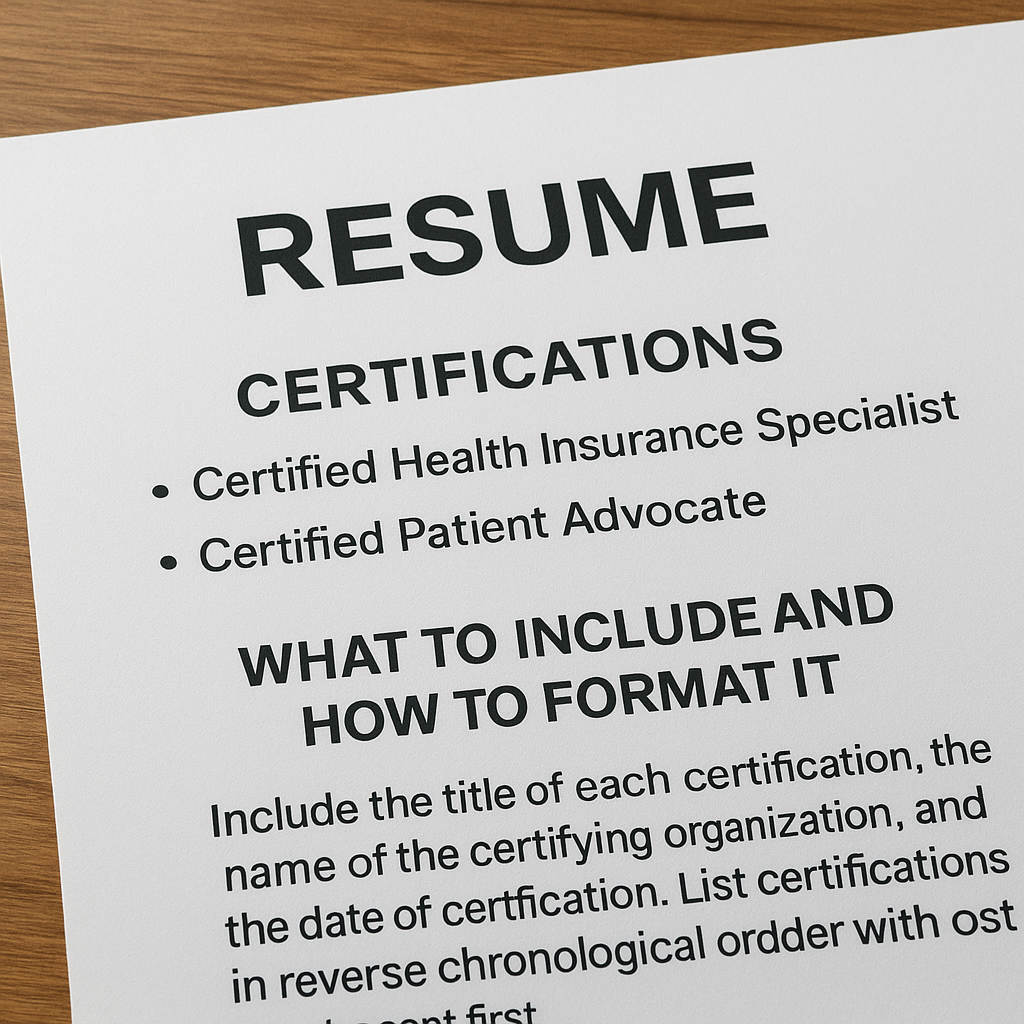
Your resume’s format plays a crucial role in how certifications are perceived. Use clear headings and bullet points, ensuring that your certification list is easy to read. Here’s how you can format your certifications:
- Create a Dedicated Section: Label your section as "Certifications" to draw attention.
- Use Bullet Points: List certifications using bullet points for a straightforward presentation.
- Include the Date Earned: Adding the year you obtained the certification can demonstrate its relevance and your continued professional development.
For example, a well-structured certification entry may look like this:
This format allows recruiters to quickly scan and identify your qualifications.
Using an Appropriate Section for Certifications
Where to Place Certifications on Your Resume
The placement of your certifications can significantly influence your resume’s overall appearance. Depending on your career field and experience level, consider these placements:
- Near the Top: If your certifications are particularly relevant and impressive, place them near the top of your resume, right after your summary or education section.
- Below Experience: If you have more extensive work experience, consider placing certifications beneath your professional experience section.
- As a Standalone Section: For candidates with numerous credentials or those in technical fields, creating a dedicated section just for certifications is often beneficial.
This strategic placement clarifies the importance of your credentials while maximizing readability.
Customizing Your Certification List for Each Application
Tailoring Certifications to Job Descriptions
Each job application can be unique; therefore, your resume should reflect this. Tailoring your certification list allows you to demonstrate that you have the specific qualifications required for the job. Consider these steps:
- Review the Job Description Thoroughly: Pay attention to the skills and certifications explicitly mentioned in the posting.
- Select Certifications Based on Relevance: Adjust your certification list to align with what the employer seeks.
- Update Dates and Details: Ensure that any recent certifications are included and accurately represented.
By customizing your certification list for each position, you emphasize your suitability for the role while maintaining a clean and focused presentation.
Real-World Case Study
Certification Lists in Action
Let's consider the case of Sarah, a project manager with various certifications. Her initial resume included a long list of certifications, spanning over two pages. While Sarah thought it showcased her qualifications, hiring managers found it cluttered and confusing.
After receiving feedback from a career coach, Sarah revamped her resume. She selected only the most relevant certifications, highlighting her Project Management Professional (PMP) and Certified ScrumMaster (CSM).
By condensing her certification list to just these two, she transformed her resume from a cluttered document into a succinct showcase of her qualifications. In her next job application, Sarah secured an interview with a top consulting firm, demonstrating the power of a strategically curated certification list.
Common Misconceptions About Certifications
Debunking Myths
Navigating the world of certifications can be confusing. Here are a few common misconceptions that job seekers often have:
- All Certifications Are Equal: Many believe that simply listing any certification adds value. In reality, only industry-recognized credentials hold weight in the hiring process.
- Certifications Make Up for Lack of Experience: While certifications can enhance your resume, they cannot replace the need for relevant work experience.
- Any Certification Should Be Listed: It’s essential to feature only those certifications that align with the job. Overloading your resume can detract from your key strengths.
Understanding these misconceptions will help you refine your resume and lead to more successful job applications.
Actionable Tips for a Clean Resume
Simple Steps to Improve Certification Presentation
To ensure your resume remains uncluttered while effectively listing your certifications, consider these actionable tips:
- Use a Consistent Format: Stick to one format for dates and titles to maintain coherence.
- Limit Your List: Aim for 3-5 certifications and avoid listing expired ones.
- Focus on Appropriateness: Tailor your certification list to the job you’re applying for, leaving out any irrelevant credentials.
- Update Regularly: Keep your certifications current; frequent updates reflect your commitment to professional growth.
- Utilize Professional Resume Templates: Opt for professional resume templates that allow you to showcase your certifications clearly.
Implementing these strategies will help you build a resume that conveys professionalism without overwhelming potential employers.
Conclusion & Key Takeaways
Creating a resume that showcases your certifications without cluttering it is vital for securing job interviews. By understanding the importance of certifications, adopting best practices for listing them, and ensuring a tailored approach for each application, you can present your qualifications effectively. Remember to always prioritize clarity, relevancy, and organization.
Don’t forget—your resume is your personal marketing tool. It should reflect who you are as a professional. To streamline your process and ensure quality, consider using our free resume builder to create a clean, effective resume that highlights your education and certifications seamlessly.
FAQs
How many certifications should I list on my resume?
Focus on 3-5 certifications that are most relevant to the position you're applying for.
Should I include expired certifications?
Generally, it's best to exclude expired certifications unless they showcase relevant skills.
Where should I place certifications on my resume?
Certifications can be placed at the top, in a dedicated section, or below your work experience, depending on relevance.
Are all certifications valued equally by employers?
No, prioritize certifications recognized in your industry or by potential employers for maximum impact.
How often should I update my certification list?
You should update your certification list every time you acquire a new credential or change the job you're targeting.
This article is part of our complete resume guide for career changers in India.