Resume Certifications Section: What to Include and How to Format It
Learn which certifications to include on your resume, how to format them correctly, and where to place them to maximise your chances of getting hired.
Introduction
Crafting a compelling resume is crucial in today’s competitive job market, and an often overlooked yet vital component is the Resume Certifications Section: What to Include and How to Format It. Certifications not only validate your skills but also differentiate you from other candidates. However, many candidates struggle to present this important information effectively, which could potentially cost them job opportunities.
In this comprehensive guide, we’ll delve into what certifications you should include, how to format them, and actionable tips to make your resume shine. Whether you’re a seasoned professional or just starting your career, understanding how to wisely display your credentials can significantly enhance your job search efforts.
Understanding the Importance of Certifications
Why Certifications Matter
In various industries, certifications serve as evidence of your expertise and commitment to professional development. For instance, in fields like IT, project management, and healthcare, they signal to potential employers that you possess specialized knowledge that could benefit their organization.
According to the Bureau of Labor Statistics, certain certifications can enhance your earning potential significantly. For example, certified project managers earn an average of $90,000 compared to their non-certified counterparts who earn around $75,000.
When to Include Certifications
Not all certifications deserve a spotlight on your resume. Only include those:
- Relevant to the job you're applying for
- Recognized in your industry
- Recent (generally obtained within the last few years)
What to Include in Your Certifications Section
Key Components to Highlight
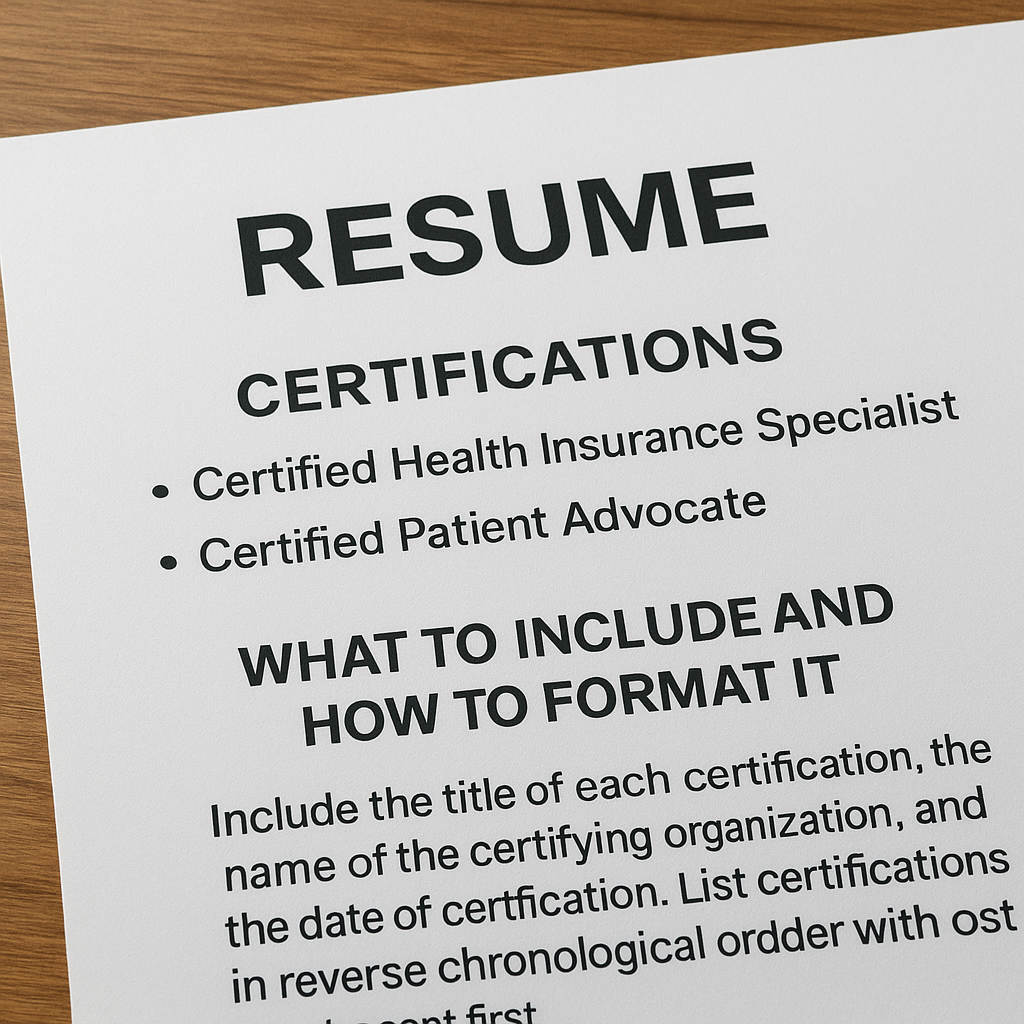
When listing certifications, ensure you include the following information:
- Certification Title: Clearly state the full title.
- Issuing Organization: Mention where you received the certification from.
- Date Achieved: Include the month and year, if applicable.
- License Number (if relevant): For certain fields like healthcare or finance.
Formatting Your List
Use a clear and readable format—ideally in bullet points—to enhance readability. For example:
Certified Project Management Professional (PMP)
Project Management Institute (PMI), June 2020Cisco Certified Network Associate (CCNA)
Cisco Systems, March 2021
How to Format Your Certifications Section
Different Resume Sections
The placement of your certifications can vary based on your experience level:
- Entry-Level: If you’re starting your career, place certifications near the top, under your summary or skills section.
- Experienced Professionals: If you have considerable experience, consider including it towards the end of your resume, segmenting it as its own section titled “Certifications” or “Professional Development.”
Visual Appeal
Ensure your layout is visually appealing. Use a consistent font style and size, and consider spacing between entries. Here’s a format to follow:
Real-World Example: Stand Out with Certifications
Let’s illustrate the impact of the certifications section with a case study of Jane Doe, an IT professional.
Background: Jane, who was seeking a role in cybersecurity, had several certifications, including CompTIA Security+ and Certified Information Systems Security Professional (CISSP).
Strategy: She strategically placed her certifications section at the top of her resume to capitalize on their relevance. During her job hunt, Jane received multiple interview requests, highlighting how her credentials directly made her application stand out amid hundreds of others.
This respectful placement not only demonstrated her qualifications but also her proactive approach to professional growth.
Common Questions and Misconceptions
Do I Need to Include Every Certification?
No, prioritize certifications that are highly relevant to the job at hand. Including irrelevant certifications can dilute your message.
What if My Certification Has Expired?
If your certification has expired, omit it. Instead, focus on more recent qualifications or ongoing education that demonstrates continued professional engagement.
Should I Include Non-Industry Certifications?
While they may not directly pertain to the job, soft skills certifications (like Leadership or Team Management) can be included if they enhance your employability in the desired role.
Actionable Tips for a Strong Certifications Section
Creating a compelling certifications section is more than just listing credentials. Here are five actionable tips:
- Tailor to Job Description: Always adjust your certifications to match the requirements outlined in job postings.
- Use Keywords: Incorporate industry-specific terms to pass through Applicant Tracking Systems (ATS). Consider using our ATS Resume Checker to optimize your resume.
- Group Similar Certifications: If you have multiple certifications in one area (e.g., IT), consider grouping them together for clarity.
- Keep it Brief: Focus on the most relevant and recent certifications to maintain brevity in your resume.
- Consider Visual Enhancements: Don’t hesitate to include icons or logos of the issuing organizations to catch the reader's eye—make sure it looks professional.
Conclusion & Key Takeaways
Incorporating a well-structured certifications section can significantly enhance your resume, making it a powerful tool in your job search arsenal. Remember to focus on relevance, clarity, and presentation. Key Takeaways:
- Evaluate which certifications provide the most value for your career goals.
- Use clear formatting to enhance readability.
- Tailor your certifications to align with job descriptions.
Ready to build your resume? Try our free resume builder today!
Frequently Asked Questions
Can I add certifications that I'm currently pursuing?
Yes! It's good practice to mention them as "in progress" to demonstrate your commitment to continuous learning.
What if my certification is from a new or lesser-known institution?
Even lesser-known certifications can add value, especially if they demonstrate an emerging skill set that’s relevant to the role.
Should I include soft skill certifications?
Including soft skills certifications is beneficial, especially if you can tie them back to how they’ll help you perform in the targeted role.